
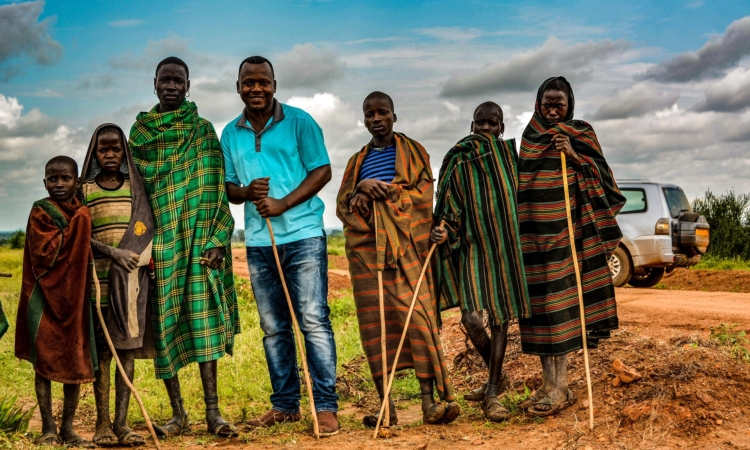
The Karamojong and the IK people are the communities that live around the park. Community tours and village walks let visitors engage with the Karamojong, who are known for their pastoral way of life.
They are a Nilotic ethnic group living in the northeast of Uganda. There are about 475,000 Karamojong people, and they speak both the Karamojong language and English.
Tourist visits help support the Karamoja region. Visitors get to learn about the Karamojong culture and their pastoral lifestyle, which is their main economic activity.
They move around nearby districts for about 3 to 4 months each year in search of water and pasture for their animals because they live in a semi-arid area.
Because of their lifestyle, the Karamojong are familiar with the Maasai of northern Kenya and Tanzania. Visiting them gives a chance to see how they live. Their homes, called manyattas, are built with grass and shelter extended families.
Lorukul village, just outside the park, benefits from community tours. Visitors buy handmade items like jewelry, traditional baskets, and pottery. The elders share stories about their history, clans, and family roots.
Interacting with the Karamojong lets tourists learn how they pay bride price, raise children, and conduct marriages. They also have cultural dances where young men and women perform for visitors. These dances help keep their culture alive.
During the dances, the Karamojong jump, shake their bodies, and sing traditional songs. They perform these dances to celebrate successes, weddings, and other cultural events.
The IK people are a small group living in the Karamoja region on the slopes of Mount Morungole. The name IK means “the first to migrate.” They practice subsistence farming and produce honey.
They used to be pastoralists but lost their cattle to stronger groups like the Turkana, Karamojong, and Pokot.
Visitors also learn about the IK culture. Marriages include paying bride price with goats and beehives. They do not allow sexual relations before marriage as it is against their laws and beliefs. The IK practice polygamy and allow women to inherit property after divorce or when widowed.
Community tours and village walks around Kidepo Valley National Park are rewarding for both visitors and locals. Tourists get to learn about African culture by meeting the Karamojong and IK people.
They discover their beliefs, traditions, and way of life while supporting local handmade crafts, helping to preserve their culture.


